Fuel where you want it
Gas Line Installation in Tahlequah, OK
A gas range in the kitchen, a grill on the patio, logs in the fireplace, a heater in the shop, a generator by the meter. All of them need a line that is sized for the load, run in the right material, pressure-tested and inspected. That is the job we do, on natural gas and on propane.
- Licensed & insured
- Veteran-owned
- Indigenous-owned
Our approach
Sized, tested and signed off, not just connected
Gas piping is not hard to connect. It is easy to get wrong in ways nobody sees: a line too small for the appliances already on it, a buried run in the wrong material, a joint that was never tested, a permit nobody pulled. Those faults show up later as a weak flame, a nuisance shutdown, or a leak.
We size the pipe for every appliance on the system, run it in the correct material for where it goes, pressure-test it, and get it inspected where the city requires it. Oklahoma plumbing license OK203156, and you can look that number up yourself on the state licensing site.
How it works
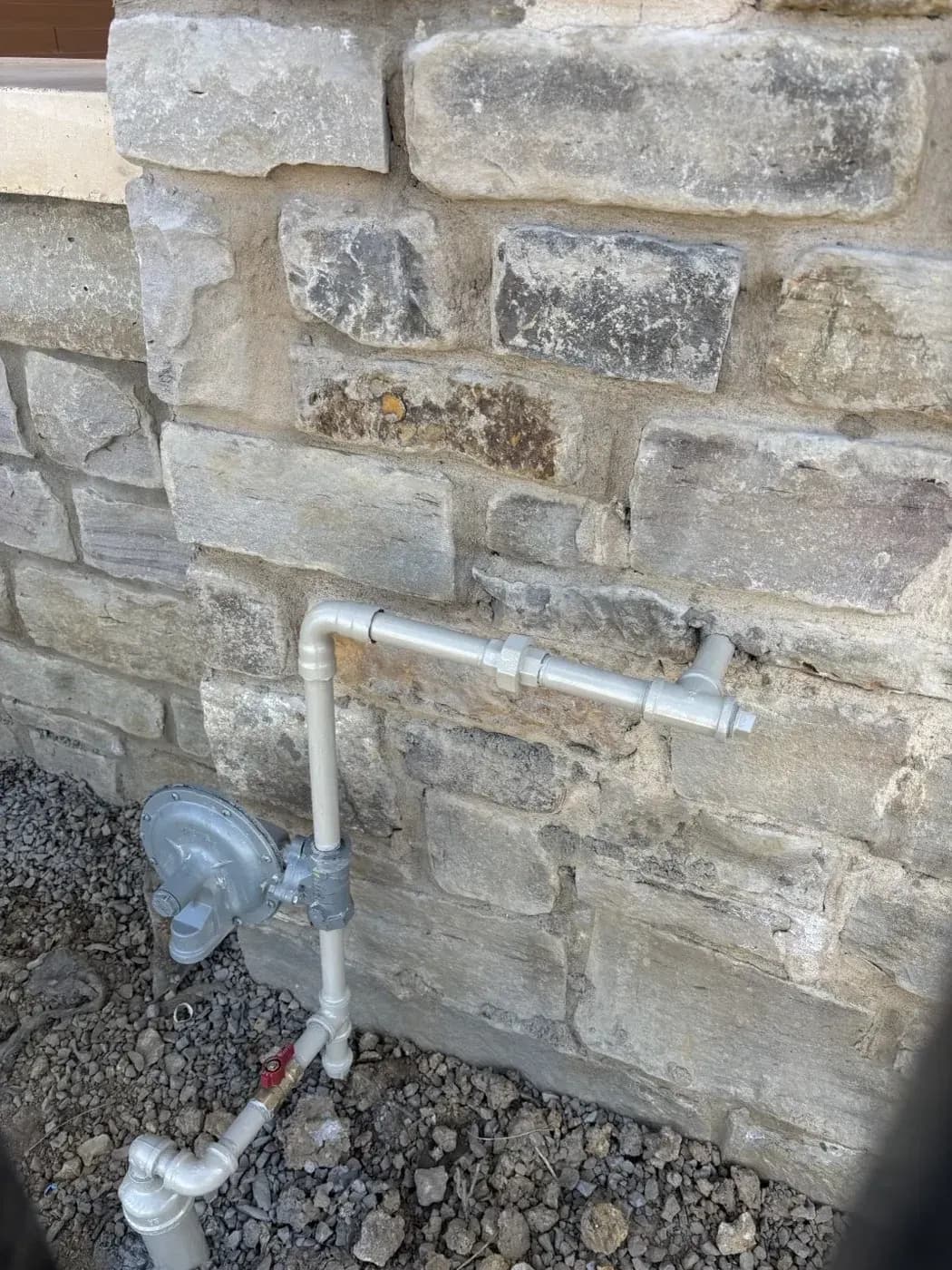
How gas gets to the flame
How gas gets to the flame
Smell gas? Leave the house first, then call 911 and your gas company from outside.
Smell gas? Leave the house first, then call 911 and your gas company from outside.
More about gas line installation
Ranges and cooktops
Bringing gas to a kitchen that has only ever had electric, or moving a line during a remodel. We size it, run it, fit a proper shutoff and connector, and check the appliance once it is lit.
Dryers and water heaters
A gas dryer or a new gas water heater in a laundry room or garage often needs its own run, and the rest of the house line checked to make sure it can still feed everything at once.
Grills and outdoor kitchens
An outdoor stub-out ends the propane bottle shuffle. Outside runs go in the right buried material, with a riser and a shutoff where you can reach it.
Fireplaces and gas logs
Lines to a fireplace, a stove or a set of logs, with the shutoff placed where code wants it and where you can actually get to it.
Standby generators
A generator that runs on natural gas or propane pulls a serious load. We size the line and the supply for the generator plus everything else in the house, and coordinate with the utility or propane supplier when the meter or regulator has to change.
Shop and garage heaters
Heat in a metal shop or a detached garage means a run outside the house, often underground, and a load calculation that includes whatever else is on the system.
Burners drop when another appliance fires
A stovetop flame that shrinks when the furnace or water heater kicks on is a line that is undersized for what is already connected.
Flexible connectors that are old, kinked or painted
Connectors have a life and a listing. Old ones behind a range or dryer are a common find, and they are a cheap thing to put right.
Pipe you cannot trace
Capped stubs, abandoned runs and lines disappearing under a slab with nobody left to say where they go. All of that should be tested before you add load.
Rust at a buried riser
Where steel pipe comes out of the ground is where it corrodes first. Flaking rust at the riser is a sign the buried section deserves a look.
Which fuel you have decides half the job. Natural gas in and around Tahlequah comes from the Northeast Oklahoma Public Facilities Authority, which supplies Adair, Cherokee and Muskogee counties. About 35 percent of homes in the county heat with piped gas. Another 10 percent burn propane out of a tank, because the mains do not reach every road in the county.
The two are not interchangeable. Propane runs at a different pressure, burns differently, and needs appliance orifices to match. The tank and its regulator belong to your propane supplier, so we work from the regulator into the house while they handle the tank and the fill.
Permits are real here. The City of Tahlequah requires a permit from the plumbing inspector before gas piping is installed, altered, replaced or converted, and the city inspects outside the corporate limits as well as inside. The city will not inspect gas piping until a drawing has been submitted, and it requires the piping to hold a 20 psi pressure test. Oklahoma law is just as plain about who may do the work: gas piping may only be installed, replaced or repaired by someone licensed under the Mechanical Licensing Act or licensed as a plumbing contractor or journeyman plumber.
Anything buried starts at OKIE811. State law says a locate request goes in at least three business days before digging, and the service costs nothing. We file it. If somebody offers to trench a gas line across your yard this afternoon, that is your answer about how the rest of the job will go.
- 1
We measure the load, not just the distance
Every appliance on the system has a rating. We add them up, measure the run, and size the pipe so the new appliance works without starving the old ones.
- 2
Permit and locates first
We pull the permit where the work requires one and file the OKIE811 locate request before any digging. Marks have to be on the ground before a shovel goes in.
- 3
Install and pressure test
Pipe goes in the right material for where it runs, with shutoffs where they belong. Then the system is capped and put under test pressure with a gauge, and it has to hold.
- 4
Inspection and start-up
The inspector sees it where an inspection applies. Then we light the appliance, check it under load, and walk you through the shutoff valves before we leave.
- Know whether you are on natural gas or propane. A meter at the house is natural gas; a tank in the yard is propane.
- Have the appliance, or at least its model number and BTU rating, so we can size the line.
- Mark where you want the stub: which wall, which side of the patio, which corner of the shop.
- List every gas appliance you already have. The old ones decide whether the new one fits.
- Do not bury, pour or close a wall over any gas pipe before it has been tested and inspected.
- If you smell gas at any point, stop, leave the building and call the gas utility and 911 from outside.
We quote the whole run: pipe, fittings, shutoffs, the test, the permit and inspection where they apply, and the digging if the line goes underground. One number, agreed before we start.
We do not price by the foot over the phone, because two lines of the same length can be very different jobs. A straight run through an open crawlspace is not the same as a trench through rock or a line fished through a finished wall.
What changes the price
- How far the run is, and what it has to pass through
- Pipe material: black iron inside, and the correct buried material outside
- Whether existing piping is large enough or has to be upsized
- Digging conditions, including rock and driveways
- The number of appliances and shutoffs on the job
- Permit and inspection fees set by the city
Straight answers
Gas Line Installation questions, answered
Not answered here? Call or text Dustin at (918) 822-7918.
Do I need a permit for a gas line in Tahlequah?
Yes for work that installs, alters, replaces or converts gas piping. The city requires a permit from the plumbing inspector first, and it inspects both inside and outside the corporate limits. We pull it as part of the job.
Who is allowed to run a gas line in Oklahoma?
State law says gas piping may only be installed, replaced or repaired by a person licensed under the Mechanical Licensing Act or licensed as a plumbing contractor or journeyman plumber. Ask any contractor for the number and check it on the state licensing site. Ours is Oklahoma plumbing license OK203156.
How much does it cost to run a gas line to my grill?
It depends on the distance, the digging and whether your existing piping can carry another appliance. We look at it, then give one flat price covering the run, the test and the permit. You approve that number before we dig.
Can you run gas to a house that is on propane?
Yes. We run and test the house piping from the regulator inward. The tank, the regulator setting and the fill stay with your propane supplier, and we make sure the appliance orifices match the fuel.
Do you pressure-test every line?
Every new or altered line, yes. The city requires gas piping to hold a 20 psi test, and it will not inspect the work until a drawing of the system has been submitted. A line that will not hold pressure does not get connected to an appliance.
How long does a gas line take?
A short interior run can be a day. Underground work waits on the OKIE811 locates, which state law says go in at least three business days before digging, and then on the inspection. We tell you the sequence when we quote.
Can I use flexible gas connectors for everything?
No. Connectors are made for a final appliance hookup, not for the run through the house, and they have length and listing limits. The run itself goes in rigid pipe or approved buried material.
Related services
- Gas Leak RepairSmell gas? Get out first and call 911 and the gas utility. Then we test the system, find it and fix it.
- Water Heater InstallationTank replacement, gas or electric, sized for the house and installed to code with the price fixed first.
- Tankless Water HeatersTankless installation and service, with an honest look at where a tank still makes more sense.
- Remodel & New ConstructionRough-in and finish plumbing for bathroom and kitchen remodels, additions and new builds.
Where we do this most
- Gas Line Installation in TahlequahOur home base
- Gas Line Installation in Park HillAbout 17 minutes from our shop
- Gas Line Installation in HulbertAbout 18 minutes from our shop
- Gas Line Installation in WellingAbout 21 minutes from our shop
- Gas Line Installation in KeysAbout 21 minutes from our shop
We cover all of Cherokee County. See the full service area.
Need gas line installation in Tahlequah?
Call Dustin at (918) 822-7918, or text a photo with your town. One flat price before any work starts.